


Spelt is a traditional wheat that has been grown across Europe and Western Asia for thousands of years. Although closely related to modern bread wheat, it developed under very different farming conditions, long before large-scale milling and uniform baking became the norm.
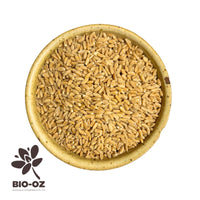
Our spelt grain is sourced, dehulled and graded by Geoff Brown at Bio-Oz. It is produced within a low-input farming system and selected for flavour, resilience, and suitability to traditional milling and baking rather than maximum yield. The grain supplied is the E3 spelt population, a maintained line valued for reliable performance, characteristic flavour and high levels of digestibility due to low levels of fructans.
Why We Love It
Spelt sits in an interesting place among wheats. It belongs to the same hexaploid wheat group as modern bread wheat, yet it retains the husked grain structure and variability of older farming systems. The result is a flour that behaves familiarly in baking but with a softer texture and a more rounded flavour.
For home bakers and cooks, it offers a grain that works across many applications while still expressing a clear grain character.
About This Spelt Grain
Spelt is a hulled wheat, meaning each kernel remains enclosed in a protective husk after harvest and must be mechanically dehulled before milling or cooking (which Geoff does for us). Free-threshing wheats release their grain during harvesting, which made them better suited to industrial agriculture. Spelt persisted in smaller-scale farming regions where storage stability and adaptability mattered more than processing efficiency.
Because it is a maintained population rather than a highly standardised modern variety, spelt can show small seasonal differences in handling. These variations are typically subtle and are part of how grains respond to climate and soil conditions and expresses in terms of protein, fat and carbohydrate ratios. This season's crop due to the lower rainfall provided a higher protein at 17% and a tighter hull, due to the low moisture forcing the hull to pinch tighter to the kernel, making it a bit harder for Bio-Oz to dehull.
If you are keen to really dive deep into spelt's journey, we have written a more comprehensive overview in this article.
What makes this spelt grain so special?
This spelt grain is from the E3 population. A line that has been carefully selected, and maintained for its particular grain chemistry. Analyses have shown comparatively low levels of certain fermentable carbohydrates (fructans) and lower expression of some structural plant proteins, including expansins, when compared with many standard wheat and spelt types. These differences may influence baking behaviour and how some individuals experience foods made from the grain. Spelt is still a wheat and contains gluten, and it is not suitable for people with coeliac disease or those requiring a strict gluten-free diet.
To understand more about the variables that can affect how an individual can experience glutinous grains, we have written an article on the topic for anyone interested.
Culinary Use
Spelt is versatile in the kitchen both as a whole grain and as flour.
Whole grain cooking
After soaking, the kernels cook similarly to wheat grain while retaining a pleasant chew. They work well in soups, grain salads, pilafs, and porridge.
Home milling
Spelt mills easily in both stone and impact mills. Freshly milled flour carries a mild sweetness and nutty aroma.
Baking
Spelt flour forms dough easily but benefits from gentler handling than standard bread flour. Many bakers reduce kneading time and allow longer resting or fermentation. It can be used on its own for tender breads or blended with stronger wheats for additional structure.
Common uses include:
-
sourdough loaves
-
flatbreads
-
pancakes and muffins
-
biscuits and pastries
-
pasta and crackers
About the Grower
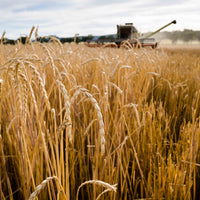
Our spelt is dehulled, graded and supplied by Bio-Oz in Parkes, NSW. Bio-Oz works with experienced grain growers across western New South Wales and specialises in buckwheat and traditional grains. Their production system emphasises soil care, crop rotation, and minimal chemical inputs, with grain stored in sealed, segregated silos to maintain quality.
FAQs
Is spelt the same as whole wheat?
No. Spelt belongs to the same wheat group as modern bread wheat but has a different grain structure and typically produces softer, more extensible doughs.
Does spelt contain gluten?
Yes. Spelt is a wheat and is not suitable for people with coeliac disease.
Can I mill this spelt grain at home?
Yes. Our spelt has been dehulled, cleaned and graded and is ready for home milling.
Can I cook the grain whole?
Yes. Soak for several hours or overnight, then simmer until tender. It holds its shape well and works in salads, soups, and grain bowls.
Is spelt suitable for sourdough?
Yes. It responds well to slower fermentation and gentle handling. Some bakers blend it with stronger flour for higher-rise loaves.
Is this spelt grain genetically modified?
No. The e3 line of spelt is a special line that has been selected and maintained for it's lower levels of fermentable carbohydrates (fructans) and lower expression of some structural plant proteins such as expansins and ATIs.
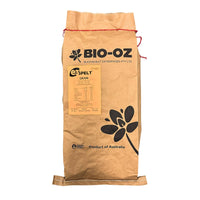
Product packed by the producer in a multi-walled paper bag.
Weight:
Dimensions: x x
Product contains Gluten
Growing Methods:

