


Expected July
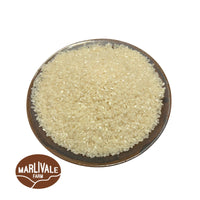
This gently polished white rice is grown by the Boyle family at Marlivale Farm in the Nimbin Valley of Northern NSW. The variety, Tachiminori, is a Japanese medium to short grain rice known for its soft texture and clean, lightly sweet flavour. Unlike most Australian rice, which is grown in irrigated flood bays in southern NSW, Marlivale’s rice is entirely rain-fed. The crop relies on natural rainfall and stored soil moisture rather than irrigation, making it part of a small but growing movement toward climate conscious Australian rice.
The result is a versatile table rice that cooks up tender and cohesive, perfect for everyday meals, sushi, rice bowls and creamy desserts.
About the Producer
Marlivale Farm is a fifth generation family farm on Widjabul Wia-bal Country in the Nimbin Valley. Relatives of the Boyle family have been farming in this region since the 1860s. Today the farm is stewarded by Frank and Andrea, along with their daughter Sophie and her partner Mac, who returned in 2020 to continue the family tradition.
The family grows dryland rice, pecans and beef cattle in a regenerative system that includes cover crops, mixed pastures, rotational grazing and on-farm fertility inputs. Their rice is grown without irrigation and forms part of a rotation designed to build soil health, support biodiversity and work with the natural rhythms of their subtropical landscape.
To learn more, check out Marlivale's Bio Page
Why is this rice so special?
Rainfed and Australian grown
This rice is produced without irrigation, relying entirely on rainfall. It stands apart from the conventional irrigated rice industry and reflects a low water, climate conscious approach.
A subtropical adapted japonica
Tachiminori performs beautifully in the volcanic soils and humid summers of Northern NSW. It has a soft, slightly sticky texture when cooked.
Grown in a regenerative rotation
Rice is integrated with cover crops, pastures and grazing animals. The system is designed to recycle nutrients, suppress weeds naturally and improve soil structure over time.
Small, family-managed production
Grown, harvested and handled on a mixed farm that values biodiversity, low chemical use and long term stewardship of the land.
Culinary Uses
-
Everyday steamed rice
-
Sushi and onigiri
-
Stir-fries and rice bowls
-
Rice puddings and desserts
-
Blended with stock for soups or congee
-
As a base for grain salads or fried rice
Rinse lightly before cooking.
Typical ratio: 1 cup rice to 1.5–1.6 cups water, depending on preferred texture.
Storage
Store in a cool, dry place below 20ºC. Once opened, keep in an airtight container to preserve freshness and protect from pantry pests.
FAQs
Is this rice grown in Australia?
Yes. This rice is grown at Marlivale Farm in the Nimbin Valley of Northern NSW. It is one of the few rainfed rices produced in Australia.
What is the difference between rainfed rice and irrigated rice?
Most Australian rice is grown in irrigated flood bays in southern NSW, where fields are deliberately held under water during part of the season. These standing water conditions create low oxygen environments that allow methanogenic microbes to thrive, which leads to methane being released as part of the natural decomposition process.
Marlivale’s rice is grown without irrigation, relying entirely on rainfall and stored soil moisture. Because the soil is not flooded, oxygen is present in the root zone and methane-producing microbes do not dominate. This results in significantly lower methane emissions compared with traditional paddy systems. Rain-fed production also uses far less water and fits naturally within the farm’s regenerative mixed-farming rotation.
What variety of rice is it?
It is the Japanese variety Tachiminori, a medium to short grain japonica known for its soft, slightly sticky texture when cooked. If you want it to be fluffier and less sticky, give it a good rinse, with 3 or 4 rinses not being excessive.
How does this rice cook?
Tachiminori cooks tender and cohesive with a clean, lightly sweet flavour. It works well for everyday steamed rice, sushi, rice bowls, fried rice and creamy desserts.
Do I need to rinse rice?
It depends on whether you want sticky or fluffly rice. If you are cooking sushi, onigiri or risotto a light rinse is recommended. If you would like it to be a nice fluffy rice for stir-fry or as a side, give it a good rinse, with 3 or 4 rinses not being excessive.
What is the water ratio?
Start with 1 cup rice to 1.4–1.6 cups water, depending on your preferred firmness. Slightly less water gives a firmer grain; slightly more creates a softer, stickier finish.
Is this tachiminori rice suitable for sushi?
Yes. Tachiminori naturally has the cohesive texture needed for sushi and onigiri.
Is this rice organic?
While the farm uses many organic and regenerative practices, this rice is not certified organic. It is grown with minimal intervention and is part of a rotation that includes cover crops, pasture and grazing animals.
Is this rice gluten free?
Yes. All rice is naturally gluten free. The farm does not produce glutinous grain, so it is safe in 20kg bags. However, our 1kg and 5kg are packed in a mixed use facility that also packs glutinous products as well as products that contain tree nuts and soy.
How should I store rice?
Keep it in a cool, dry place in an airtight container once opened. This protects the grain from humidity and pantry pests.
Why does the flavour vary from season to season?
Rainfed rice reflects seasonal conditions more closely than irrigated rice. Slight differences in rainfall, temperature and soil moisture can influence aroma and texture. This is part of the character of small-batch, regionally grown grains.
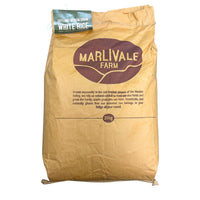
Product packed by the producer in a multi-walled paper bag.
Weight:
Dimensions: x x
Growing Methods:

