


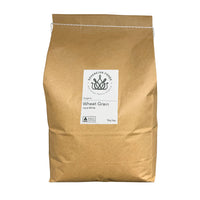

Australian-grown organic hard white wheat grain sourced through Kialla Pure Foods on Queensland's Darling Downs. With a protein content of 12%, this wheat contains a mix of varieties selected according to the miller's grain quality specifications. Suitable for home milling, wholemeal breadmaking, sourdough and wholegrain cooking, it also provides an opportunity to explore the traditional milling practice of gristing.
About This Wheat
Wheat is often identified by its variety, with each variety bringing its own combination of milling, baking and flavour characteristics. However, selecting wheat by variety is only one approach to producing flour.
Unlike our single-variety wheat grains, this organic hard wheat from Kialla Pure Foods contains a mix of wheat varieties selected according to the miller's grain receival specifications. The varieties may change between batches depending on the grain available and its characteristics.
This provides an opportunity to explore another important aspect of flour milling: gristing.
Understanding Gristing
In flour milling, the selection and combination of different wheats to produce flour with desired characteristics is known as gristing.
Wheat is an agricultural product, and its characteristics are influenced by genetics, growing conditions, soil fertility and seasonal weather. Even grain of the same variety can behave differently from one harvest to the next.
When developing a grist, millers may consider characteristics such as:
- Protein content and gluten quality.
- Dough strength and extensibility.
- Water absorption.
- Natural enzyme activity.
- Grain hardness and milling characteristics.
Combining wheats with complementary qualities allows millers to manage some of this natural variation and develop flours suited to particular applications.
For home millers, this is a technique worth exploring. You don't necessarily have to restrict yourself to milling a single variety of wheat. Combining different grains before milling opens up opportunities to experiment with flavour, texture and dough behaviour.
While our single-variety wheat grains allow you to explore the individual characteristics of different wheats, this mixed-variety hard wheat offers another perspective on grain selection and flour milling.
About Kialla Pure Foods
Based at Greenmount on Queensland's Darling Downs, Kialla Pure Foods is an Australian organic grain miller and processor.
Kialla works within the Australian organic grain supply chain, sourcing and processing organically grown grains for a range of flours, meals and wholegrain products.
Their approach to wheat selection is based on the characteristics of the grain at receival rather than a preference for a single wheat variety.
Why We Love It
- Australian-grown: Sourced from Australian organic grain production.
- Organic: Organically grown wheat grain.
- Wholegrain: Retaining the bran, germ and endosperm.
- Versatile: Suitable for home milling, baking and wholegrain cooking.
- Mixed varieties: An opportunity to explore wheat selection and the principles of gristing.
Home Milling, Baking & Cooking
Home Milling
When freshly milled, this wheat produces a wholemeal flour containing all the natural components of the grain.
As a hard wheat, it is a suitable starting point for breadmaking and sourdough. As with any freshly milled flour, water requirements, mixing and fermentation may need to be adjusted according to the characteristics of the flour.
Rather than relying solely on a recipe's specified hydration, we encourage home millers to observe how their dough develops and adjust accordingly.
You can also experiment with combining this wheat with other grains, such as softer wheats, spelt, emmer or khorasan, to develop your own flour blends.
Wholegrain Cooking
Wheat grains, sometimes referred to as wheat berries, can also be cooked and eaten whole.
Rinse the grain thoroughly before cooking. Soaking overnight is optional but may help reduce cooking time. Simmer in plenty of water for approximately 45 to 60 minutes, or until the grains reach your preferred texture. Drain any excess water.
Cooking times may vary according to the grain and whether it has been soaked.
Suggested Uses
- Freshly milled wholemeal flour.
- Sourdough and yeasted breads.
- Pizza bases and flatbreads.
- Homemade flour blends.
- Grain salads and pilafs.
- Soups and casseroles.
Additional Product Information
| Attribute | Details |
|---|---|
| Botanical name | Triticum aestivum |
| Grain classification | Hard wheat |
| Variety | Mixed wheat varieties |
| Supplier | Kialla Pure Foods |
| Ingredients | 100% organic wheat grain |
| Growing method | Organic |
| Country of origin | Australia |
| Allergens | Wheat, gluten |
| May be present | Buckwheat, egg, milk and soy |
| Storage | Store in a cool, dry place in an airtight container. |
FAQs
What variety of wheat is this?
This product contains a mix of wheat varieties selected according to Kialla's grain receival specifications. The varietal composition may change between batches.
Is mixed-variety wheat inferior to single-variety wheat?
No. Varietal purity is not, on its own, an indicator of grain quality or baking performance. Commercial millers commonly combine different wheat varieties when developing flour with particular characteristics.
Single-variety grains and mixed-variety grains simply offer different approaches to wheat selection.
Is this wheat suitable for sourdough?
Yes. Hard wheat is generally well suited to breadmaking and can be used to produce freshly milled wholemeal sourdough. Hydration, mixing and fermentation requirements may vary with the characteristics of each batch.
Can I combine this wheat with other wheat varieties?
Yes. Combining different wheats before milling is an excellent way to explore gristing at home. Start with small quantities, record your proportions and observe how changes influence flavour, dough development and the finished loaf.
Does hard wheat mean high protein?
Not necessarily. Hardness describes the physical characteristics of the wheat kernel, whereas protein content is a separate measurement. Neither grain hardness nor protein percentage alone determines the strength or baking performance of flour.
For more information, read The Gluten Story.
Will every batch behave exactly the same way?
Wheat is a natural agricultural product. Its characteristics can vary with growing conditions, harvest season and varietal composition. We recommend making small adjustments to your baking techniques when working with a new batch of grain.
How should I store wheat grain?
Store in an airtight, food-grade container in a cool, dry location away from direct sunlight. Whole grain generally stores well when protected from moisture, excessive heat and pantry pests.
For further information, read our guide to Managing Pantry Pests.
Product repacked by Sovereign Foods in compostable bags.
Our Bags are made from brown recycled paper and have a 100% natural corn-based compostable biofilm. All you need to do is pop off the label before you put it in your compost (We are looking for a cost-effective compostable solution to our labels). These bags are a good short term but are not completely airtight. When you get your goodies home, be sure to pop your products into a jar and store them in a cool, dry place out of sunlight. You can reuse these bags around the house as a short-term solution to keep things dry and reduce air contact.
Weight:
Dimensions: x x
Product contains Gluten and packed in a facility that stores and packs products that contain Nuts and Soy
Growing Methods:

