


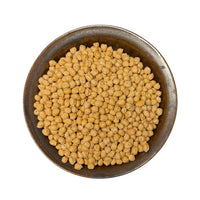
Australian-grown organic white chickpeas of the Genesis 090 variety, grown by Graham and Judith Carter on their family farm near Serviceton in Victoria's western Wimmera. These Kabuli-type chickpeas have a mild, nutty flavour and a creamy texture when cooked, making them ideal for hummus, curries, salads, soups and everyday cooking.
About White Chickpeas
These white chickpeas are the Genesis 090 variety, a Kabuli-type chickpea grown by the Carter family in Victoria's western Wimmera.
Kabuli chickpeas are recognised for their pale colour, rounded shape and relatively large seeds. They are the chickpeas most Australians are familiar with, particularly in Mediterranean, Middle Eastern and Indian cooking.
Unlike the smaller, darker Desi chickpeas, Kabuli chickpeas generally have a thinner seed coat and a milder flavour. When properly soaked and cooked, they develop a soft, creamy interior while retaining enough structure for salads and other dishes.
Chickpeas are also a useful crop in agricultural rotations. As legumes, they form a relationship with soil bacteria that allows them to fix atmospheric nitrogen. Some of this nitrogen can contribute to the wider farming system, although the amount remaining for subsequent crops depends on growing conditions and how the crop is managed.
About the Growers: The Carter Family
Graham and Judith Carter farm near Serviceton in Victoria's western Wimmera, close to the South Australian border. Their family's connection to the land stretches back to 1942, when Graham's parents began farming broadacre crops and sheep.
Graham took over the family farm at a young age and, as chemical-intensive farming became increasingly common during the 1970s and 1980s, chose to pursue a different approach. The farm achieved organic certification in the 1990s.
Farming organically in the Wimmera presents its own challenges, particularly when it comes to maintaining soil fertility and managing weeds. Over the years, the Carter family has explored approaches such as composting and adapting planting times to suit local conditions.
Alongside their chickpeas, the Carters grow cereal grains, including oats, rye and other crops suited to their region. Their approach reflects decades of experience working with the seasons and the particular conditions of their farm.
Why We Love It
- Australian-grown organic white chickpeas
- Genesis 090, a Kabuli-type chickpea variety
- Grown by Graham and Judith Carter near Serviceton, Victoria
- Produced by a family with a long history of organic farming
- Mild, nutty flavour and creamy texture when cooked
- Versatile for hummus, curries, salads, soups and roasting
- Can also be milled into whole chickpea flour
Cooking & Uses
Dried chickpeas are wonderfully versatile, but they do require a little preparation before cooking.
Cooking Whole Chickpeas
Rinse the chickpeas and soak them in plenty of water overnight, or for approximately 8–12 hours. Drain, rinse and transfer to a saucepan with fresh water.
Bring to a boil, then reduce to a gentle simmer until the chickpeas reach your preferred tenderness. Cooking time will vary depending on the age of the chickpeas, soaking time and intended use. Allow approximately 60–90 minutes as a starting guide, checking regularly.
For hummus, cook the chickpeas until particularly soft. For salads and grain bowls, you may prefer them to retain a little more structure.
Other Ways to Use Them
- Hummus: Blend cooked chickpeas with tahini, lemon, garlic and olive oil.
- Curries and stews: Add cooked chickpeas to vegetable dishes, soups and slow-cooked meals.
- Salads: Toss with fresh vegetables, herbs and a simple dressing.
- Roasting: Roast cooked, well-drained chickpeas with spices for a crunchy snack.
- Home milling: Mill the dried chickpeas into flour for savoury pancakes, flatbreads and other recipes.
Additional Product Information
| Product | White Chickpeas |
| Botanical Name | Cicer arietinum |
| Chickpea Type | Kabuli (White Chickpeas) |
| Variety | Genesis 090 |
| Growers | Graham & Judith Carter |
| Growing Region | Serviceton, Western Wimmera, Victoria |
| Growing Method | Organic |
| Country of Origin | Australia |
As a natural agricultural product, chickpea size, colour and cooking characteristics may vary slightly between seasons and batches.
FAQs
What variety of chickpeas are these?
These are Genesis 090 chickpeas, a variety belonging to the Kabuli type. Kabuli chickpeas are generally pale-coloured and rounded, and are commonly used for hummus, curries, salads and other dishes.
What is the difference between white and brown chickpeas?
White chickpeas are generally Kabuli-type chickpeas, with larger, pale-coloured seeds and a relatively mild flavour. Brown chickpeas are generally Desi-type chickpeas, which are smaller, darker and have a thicker seed coat. Both are types of the same species, Cicer arietinum.
Do I need to soak dried chickpeas before cooking?
Soaking is recommended because it helps the chickpeas hydrate more evenly and generally reduces cooking time. An overnight soak of around 8–12 hours is a good starting point.
How long do dried chickpeas take to cook?
After soaking, chickpeas commonly take around 30-40 minutes to simmer until tender, although cooking time can vary. Older chickpeas and different growing seasons can affect how quickly they soften.
Can I use these chickpeas to make hummus?
Yes. White chickpeas are particularly well suited to hummus. Cook them until very soft before blending for a smoother, creamier result.
Can I mill these chickpeas into flour?
Yes, provided your grain mill is suitable for milling dried legumes. Chickpea flour is useful for savoury pancakes, flatbreads, batters and other baking. Check your mill manufacturer's instructions before milling.
Are these chickpeas Australian grown?
Yes. These Genesis 090 white chickpeas are grown by Graham and Judith Carter near Serviceton in Victoria's western Wimmera.
Product repacked by Sovereign Foods in compostable bags.
Our Bags are made from brown recycled paper and have a 100% natural corn-based compostable biofilm. All you need to do is pop off the label before you put it in your compost (We are looking for a cost-effective compostable solution to our labels). These bags are a good short term but are not completely airtight. When you get your goodies home, be sure to pop your products into a jar and store them in a cool, dry place out of sunlight. You can reuse these bags around the house as a short-term solution to keep things dry and reduce air contact.
Weight:
Dimensions: x x
Product packed in a facility using equipment Shared with products that contain Nuts, Soy and Gluten
Growing Methods:

